Real Estate Due Diligence in the Dominican Republic
July 10, 2026
Real estate due diligence in the Dominican Republic looks simple from abroad. A lawyer reviews the title, confirms the seller owns the land, and approves the transaction. On paper, the deal is clean. Then the project stalls, because the title was only half the picture.
International buyers assume that a clean title means a clean parcel. In the Dominican Republic, those are two different questions, and two different offices answer them.
The title and the ground are not the same record
In the United States, one title search usually answers everything. The county recorder ties the owner, the liens, and the property’s legal boundaries into a single chain of record, and title insurance backstops what slips through. The Dominican Republic works differently. Two separate offices hold two halves of the answer. The Registro de Títulos records who owns the land. Mensuras Catastrales records what the land is and where its boundaries sit. Both live inside the same system, but they answer different questions, and the title insurance a US buyer leans on is far less common here. Check one without the other and you leave half the risk unseen.
This gap is common. Many parcels exist through possession, inheritance without formal transfer, or customary transfer that no one registered. A title can look perfect and still sit over a parcel whose boundaries do not match the recorded survey.
Nearly 60% of properties in the country lack complete formal title, and only 13% carry verified georeferenced coordinates in the Registro Inmobiliario (DGCN, 2023; BID, 2019).
The U.S. Department of State has flagged title and property registration as a risk for investors in the Dominican Republic, and World Bank assessments of land administration point the same way. You can still invest here. You just have to verify the ground, not only the paperwork.
What a title-only review misses
When no one checks the legal file against the physical parcel, the problems that kill projects hide between them:
- A boundary overlap, where your survey and a neighbor’s survey claim the same strip of land.
- A public road the title describes as bordering the property, while the survey shows it running thirty meters inside.
- An environmental restriction or easement that never reaches the title.
- An occupant with a possessory claim no document mentions.
- A selling entity whose power to sell no one confirmed.
A title-only review misses all of them. They surface when you go to finance, transfer, or build, and by then they cost you months.
What real estate due diligence in the Dominican Republic covers
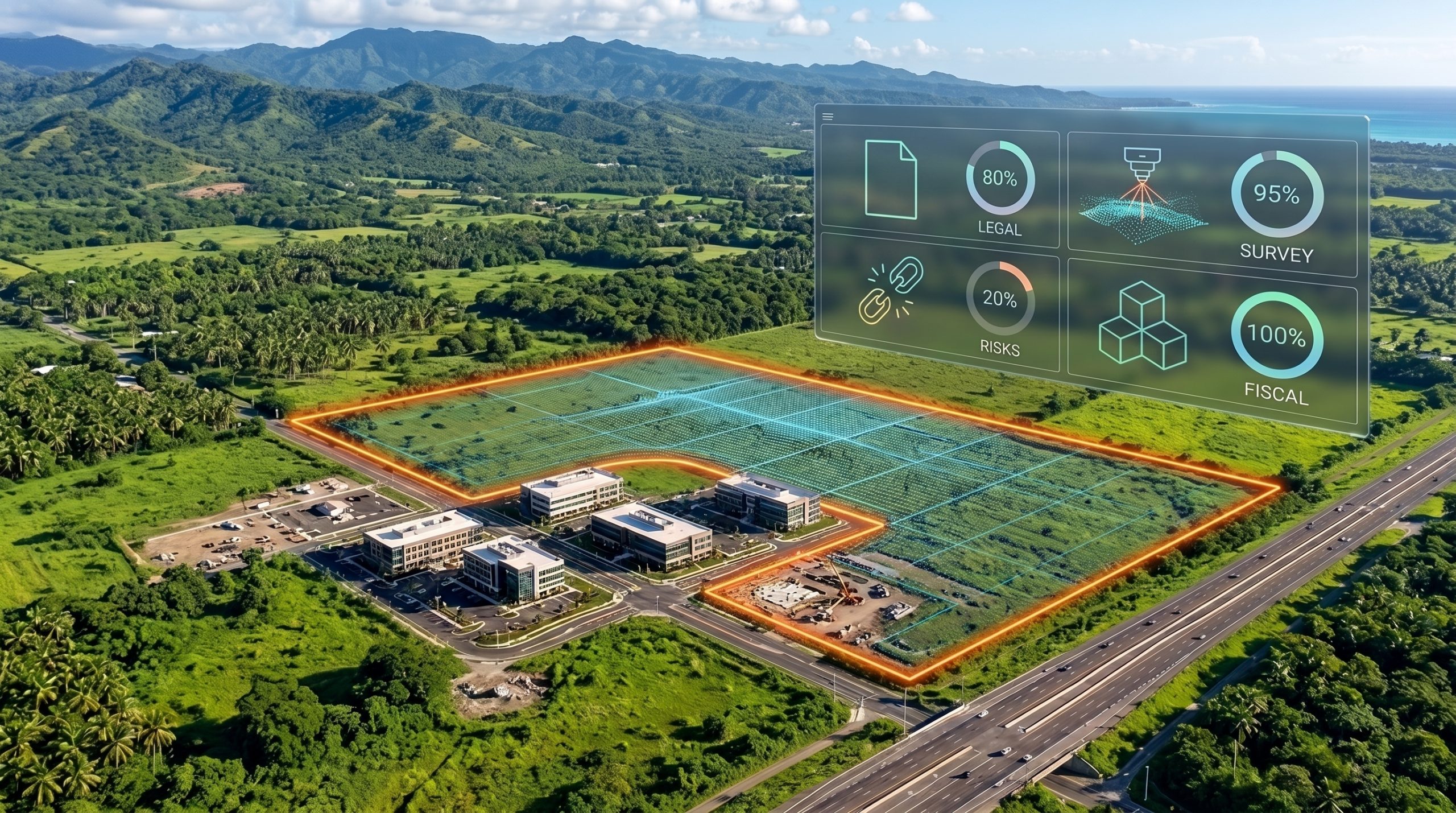
It works when you read three layers together, in one pass. At Lexgeo we run all three as one process.
On the legal layer we examine the chain of title, liens and encumbrances, pending or unregistered litigation, and the status of the deslinde and georeferencing. Most lawyers already cover this layer.
On the technical and cadastral layer we verify the survey in the field, with LIDAR and drones, and reconcile the physical reality with the legal record. We check boundaries, zoning, and permitted land use, infrastructure feasibility, and the physical and environmental risks no title records. We also read a survey for its legal standing, not just its measurements. A surveyor can measure a parcel that no one ever settles through deslinde or regularización. On paper the plano looks legitimate. Legally it stands weaker, and a buyer who reads only the drawing never sees the difference.
On the fiscal and corporate layer we cover transfer costs and tax exposure, hidden liabilities such as unpaid IPI, and the selling entity itself, its powers, its constitution, and its compliance standing.
No single professional does poor work here. Each one is right within their own file. You get correct but isolated reports, and the risk sits in the gaps between them. We close those gaps and hand you one reconciled report instead of three you have to stitch together.
Questions to ask any due diligence provider in the DR
Five questions separate a document review from real verification:
- Do you verify the cadastral survey in the field, or only review documents?
- Do the legal and survey findings arrive in one report, or two I have to reconcile?
- Do you check environmental and municipal zoning against the physical parcel?
- Do you investigate the selling entity, not only the property?
- Who answers if the title and the survey disagree?
A provider who cannot answer these is selling you a document review, not due diligence.
Before you commit capital
Lexgeo has spent 16 years reading Dominican land across legal, survey, cadastral, environmental, GIS, and tax layers, and handing it over as one integrated report. For an international buyer, that is the difference between a title that looks clean and a parcel you can finance, transfer, and build on.
Unsettled land also slows permits and financing, because lenders and agencies read the same records. Permits alone run eight to twenty-four months across more than twenty agencies, so a problem you find late can cost you a full construction season. Catching it before you sign costs less than clearing it after the money moves.
So before you buy, finance, or develop land in the Dominican Republic, do not stop at whether your title is clean. Ask whether anyone checked the ground underneath it.